An appeal to heaven
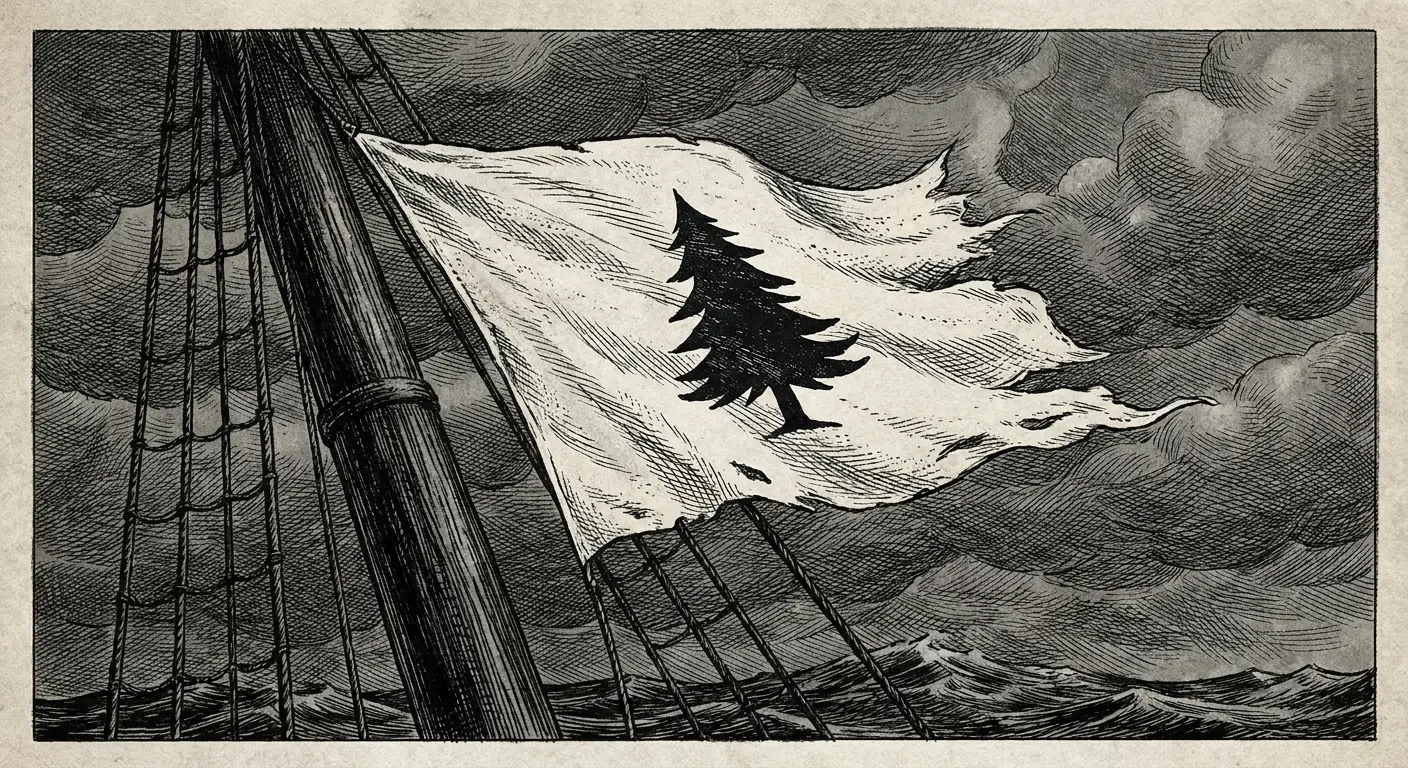
Before there was a Continental Navy, before the Declaration of Independence, a handful of small armed schooners sailed out of Massachusetts flying a plain white flag with a green pine tree on it and three words that were already a century old when Washington's men stitched them onto that flag: An Appeal to Heaven.
Locke's phrase
The words come from John Locke's Second Treatise of Government, published in 1689. Locke asked what a people can do when a ruler breaks the trust of government and no earthly court will hear their case against him, since he is himself the judge and the wrong. His answer drew on the biblical figure of Jephthah, who, unable to get a hearing from the king of the Ammonites, asked the Lord to be the judge between them: when there is no earthly power to appeal to, Locke wrote, the party wronged must appeal to heaven, and wait to have a decision from the highest judicature of all. It was a philosopher's phrase for revolution as a last, not a first, resort.
A tree already worth fighting over
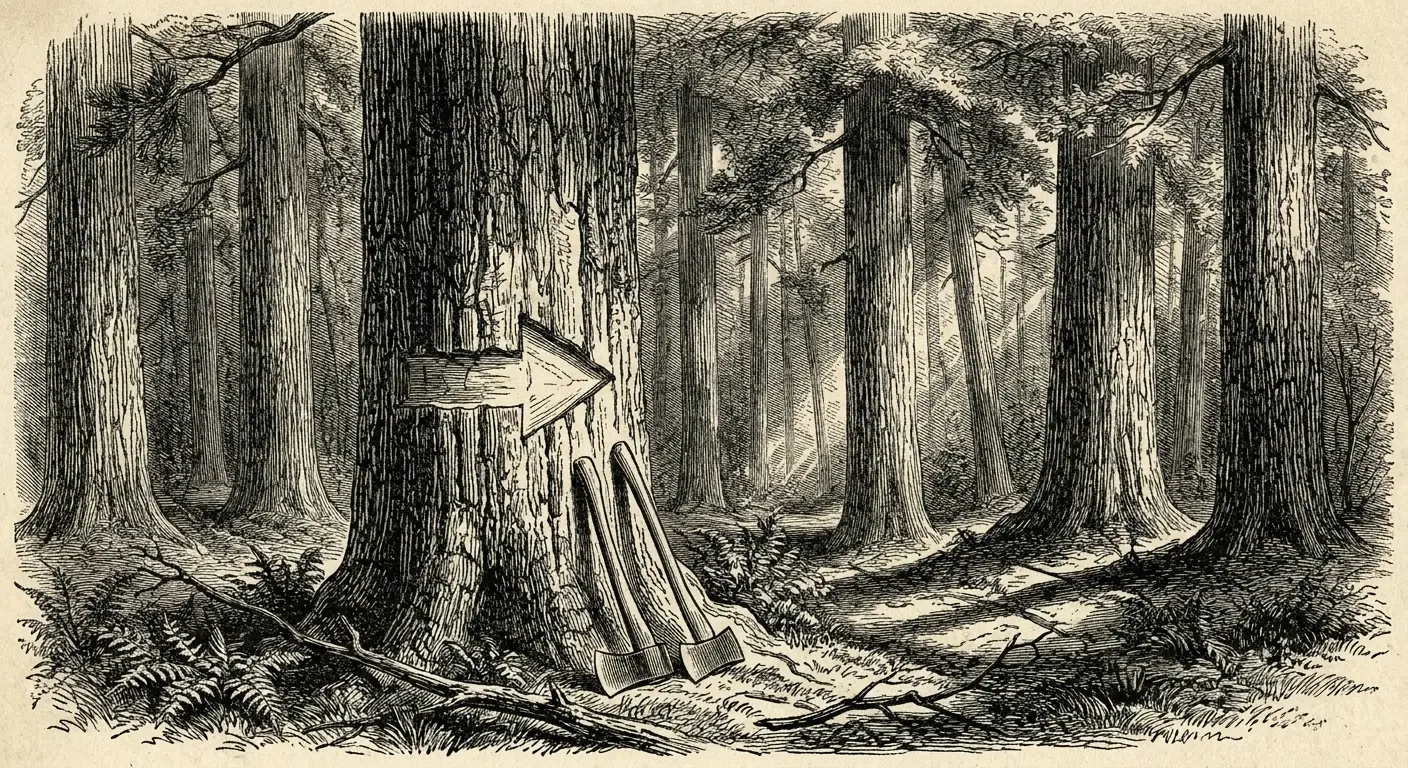
The tree on the flag was not a random choice of scenery. The white pines of New England were, in the Crown's own accounting, a strategic resource: their tall, straight trunks made the best masts in the world for Royal Navy ships of the line, and a series of Crown statutes, the White Pine Acts, reserved any pine over twenty-four inches in diameter for the Navy's own use. A royal surveyor's mark, the broad arrow, was cut into the bark of the trees the Crown had claimed, whether or not they stood on land a colonist had cleared and called his own. In 1772, loggers in New Hampshire who had cut marked pines anyway fought the sheriff sent to arrest them in what settlers called the Pine Tree Riot, one of the earlier armed confrontations of the whole Revolutionary period. New England's pine was already a symbol of a Crown that claimed more than it had cleared, decades before 1775.
Washington's schooners
In September 1775, months before Congress created a Continental Navy, George Washington commissioned a small fleet of armed schooners on his own authority to intercept British supply ships bound for occupied Boston. The first, the schooner Hannah, put to sea that same month. In October 1775 Colonel Joseph Reed, acting as Washington's secretary, wrote instructions for the fleet's colors: a white ground with a green pine tree in the middle, and the words An Appeal to Heaven.
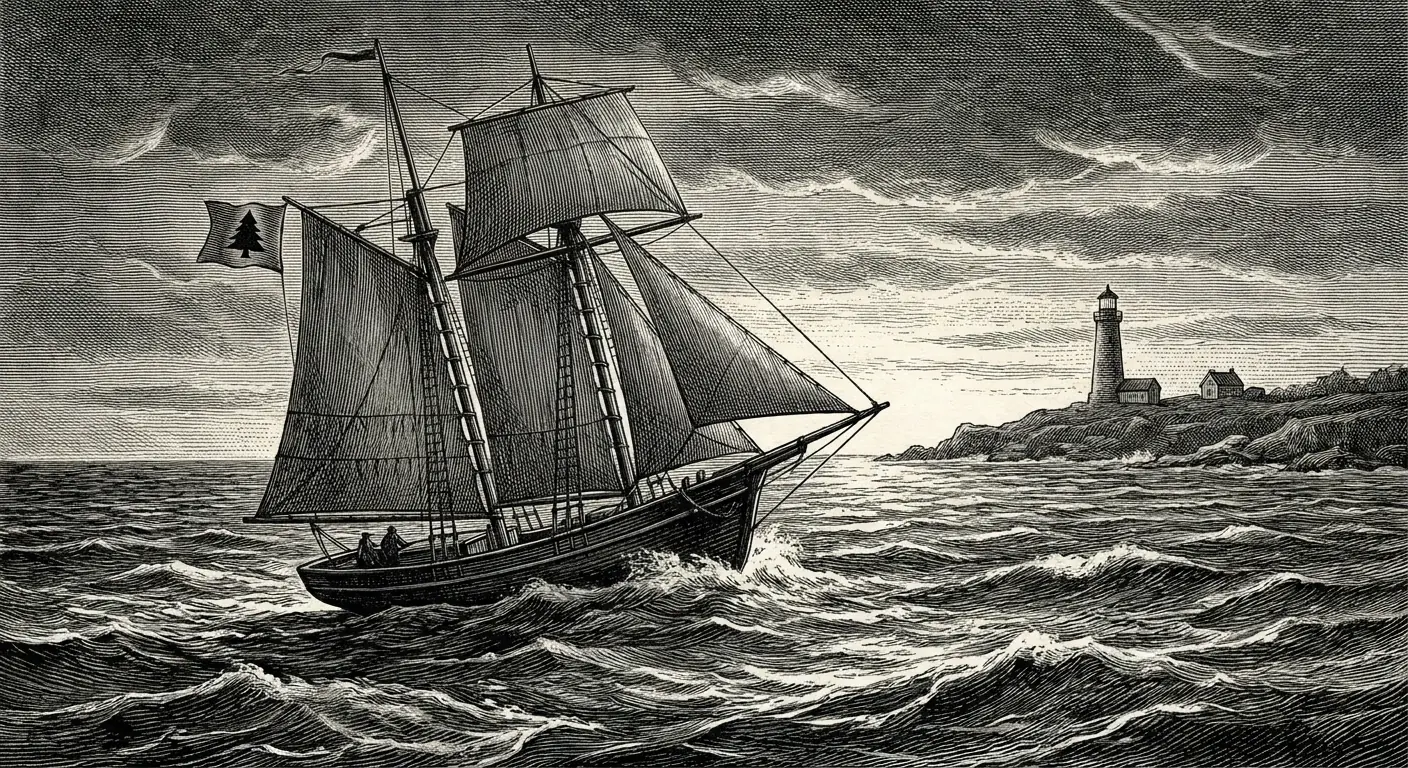
It was, in effect, the first flag of an American navy, flown before Congress had authorized one and before independence had been declared. The men who sailed under it were, by British law, committing piracy. They flew Locke's phrase anyway, on a tree the Crown had already tried to claim for itself.
The shirt

Our An Appeal to Heaven tee carries the pine tree and Washington's Cruisers, 1775 on the back. Reed wrote the order for that flag before there was a country to fly it for.