Christ Is King
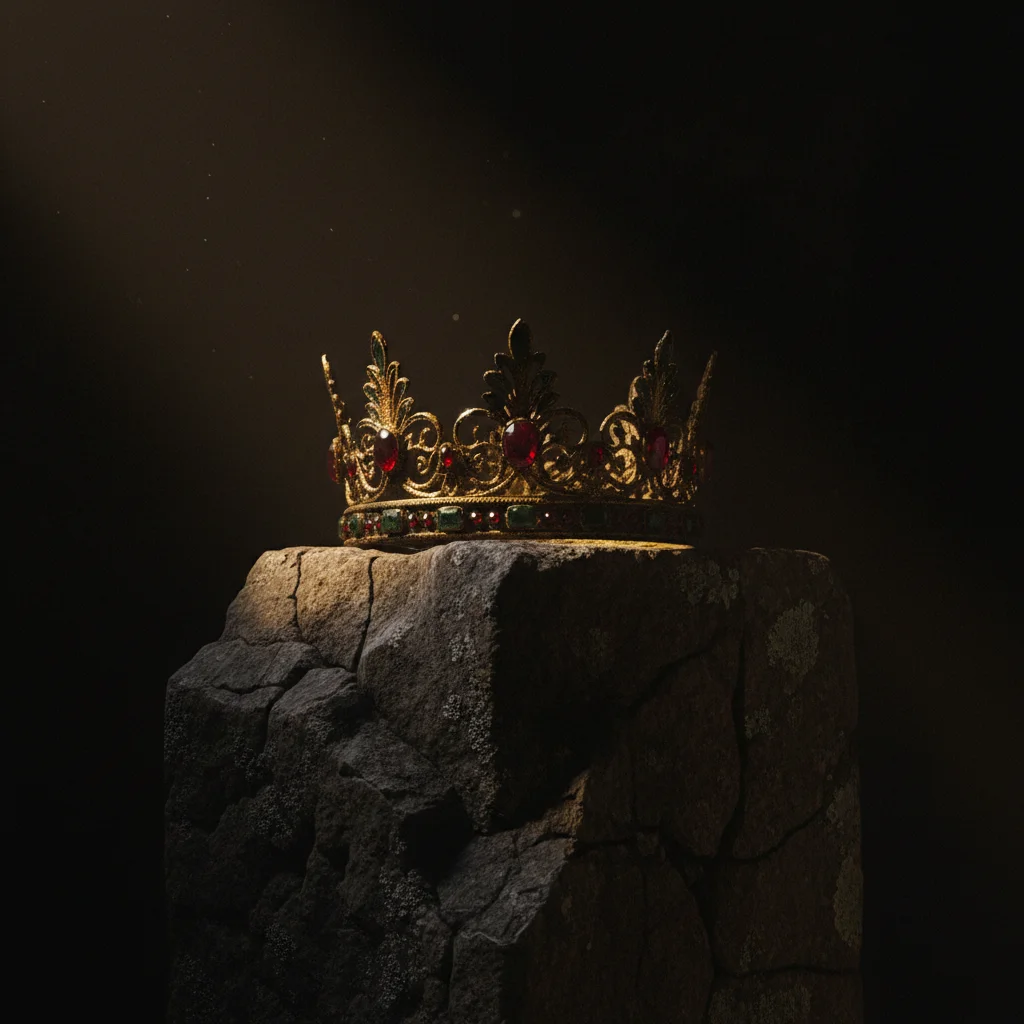
The empire did not require its subjects to worship any particular god. It required one sentence: Kyrios Kaisar, Caesar is Lord. Say it, burn a pinch of incense to the emperor's genius, and go home. Refuse, and you were an atheist in the empire's eyes, a danger to public order.
Christians refused. Their own confession used the same word, Kyrios, Lord, the word the Greek Old Testament had used for God's own name over six thousand times. Romans 10:9 put the confession in one line: Jesus is Lord. Philippians 2 said God had given Jesus the name above every name, so that at His name every knee would bow. That was not a private religious preference. In an empire that recognized only one Lord, it named a second.
The book of Revelation made the claim explicit. Its writer saw the risen Christ carrying a title written on His robe and His thigh: King of Kings and Lord of Lords. The same claim had already been written once before, on a wooden sign nailed above a cross outside Jerusalem: Jesus of Nazareth, King of the Jews. The chief priests asked Pilate to soften the wording, to make it read as a claim rather than a fact. Pilate refused. What he had written, he had written.
The refusal cost people their lives. Around the middle of the second century, the proconsul at Smyrna gave the elderly bishop Polycarp a way out: say Caesar is Lord, swear by his genius, and live. Polycarp answered, "I am not going to do what you counsel me." Pressed to curse Christ, he said instead, "Fourscore and six years have I been His servant, and He hath done me no wrong. How then can I blaspheme my King who saved me?" He was burned in the city stadium. Around the same years, the philosopher Justin Martyr told a Roman prefect, "No one in his right mind gives up piety for impiety." Threatened with torture, he answered plainly that it was his desire, to suffer for the Lord Jesus Christ. The prefect obliged him.
An empire painted over
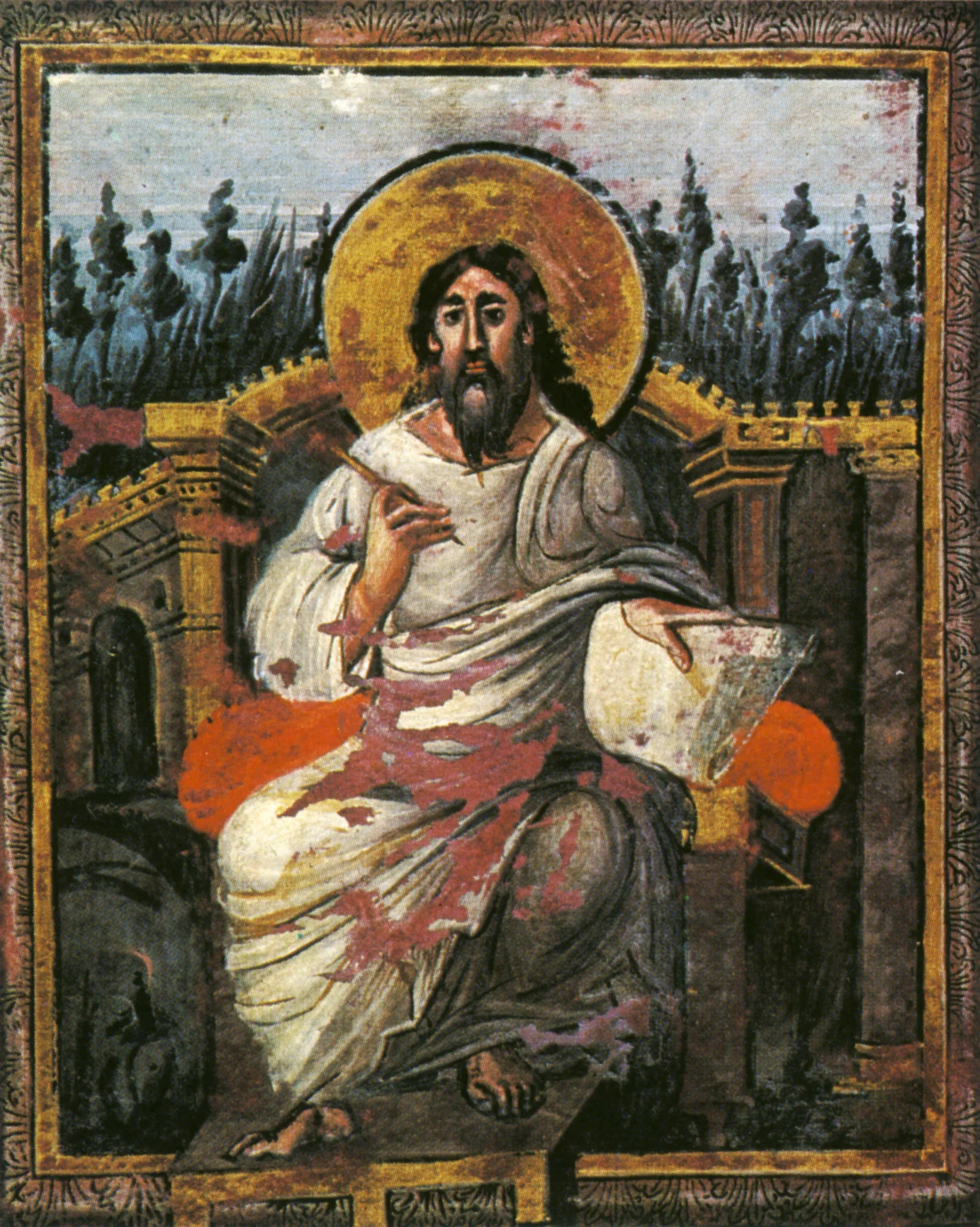
By the sixth century, the claim had a face, though not quite one face. The oldest surviving icon of Christ as Pantokrator, ruler of all, was painted for Saint Catherine's Monastery at the foot of Mount Sinai, a monastery Emperor Justinian himself had founded. It shows two different expressions on the same image, stern on one side of the face, gentle on the other, judgment and mercy in a single frame. The icon survived the two centuries of Byzantine iconoclasm, the campaign that destroyed most religious images across the empire, because Sinai sat outside the reach of the emperors who ordered it.
The title mattered because Byzantium had built a political theory on it. The emperor in Constantinople was mighty, but he was not sovereign. He ruled as Christ's vice-regent, holding an authority that belonged, first and finally, to someone else. Rome's old formula had been reversed. Caesar now answered to a king, and the empire was built to remember it.
By the late eighth century, the Frankish court had set that theology to music. At the coronation of Charlemagne, and at royal ceremonies for centuries after, singers opened with three lines borrowed from the acclamations Roman crowds once shouted at a triumphant general entering the city: Christus vincit, Christus regnat, Christus imperat. Christ conquers, Christ reigns, Christ commands. The words Rome had once reserved for its own victors were now sung for someone else first, and the crowned man on the throne came second.
Geneva wrote it into doctrine
The Reformers did not invent the claim. They organized it. John Calvin's Institutes of the Christian Religion, in the edition he finished in 1559, gives Christ three offices: prophet, priest, and king. Calvin was careful to say what kind of kingdom the third office ruled. Its nature, he wrote, is spiritual, and its whole power and permanence follow from that fact. It does not consist in worldly advantage. It belongs to the life to come, a crown that outlasts every throne that ever borrowed Christ's name for its own coronation.
Scotland fought over it
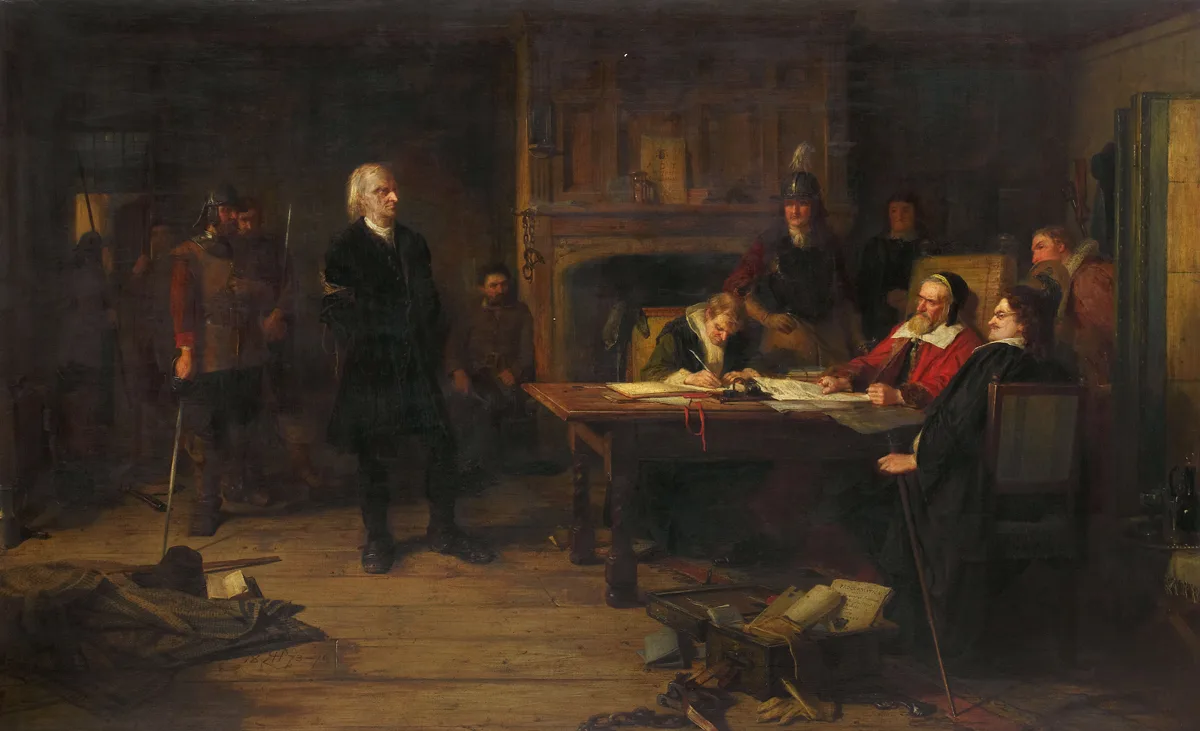
A century later, in Scotland, the same claim stopped being academic. The Covenanters, Scottish Presbyterians bound by a signed covenant to defend their church's independence from royal control, held that Christ alone was King and Head of His Church. No earthly monarch could install his own bishops over it or dictate how Scots worshipped. Charles II tried anyway. The men who resisted him carried banners that named the fight plainly. One Covenanter standard at Drumclog in 1679 read, "For Religion, Covenant, King and Country." Another, carried by William Cleland's men the same year, read "Jehovah Nissi," the Lord is my banner, alongside "For Christ and His Truths."
The next year, a small band under the preacher Richard Cameron went further. At Sanquhar, on the twenty-second of June, 1680, they posted a declaration disowning Charles II as a tyrant who had broken his own coronation oath, and declared war on him, in their own words, as "an enemy to our Lord Jesus Christ, and His cause and covenants," fighting "under the standard of our Lord Jesus Christ, Captain of Salvation." Government dragoons hunted Cameron down within weeks and killed him. The claim his declaration argued for outlived him: the Crown Rights of the Redeemer, Christ's kingship binding the state as much as the church, is still the language Reformed Presbyterian churches use today.
Amsterdam claimed every square inch
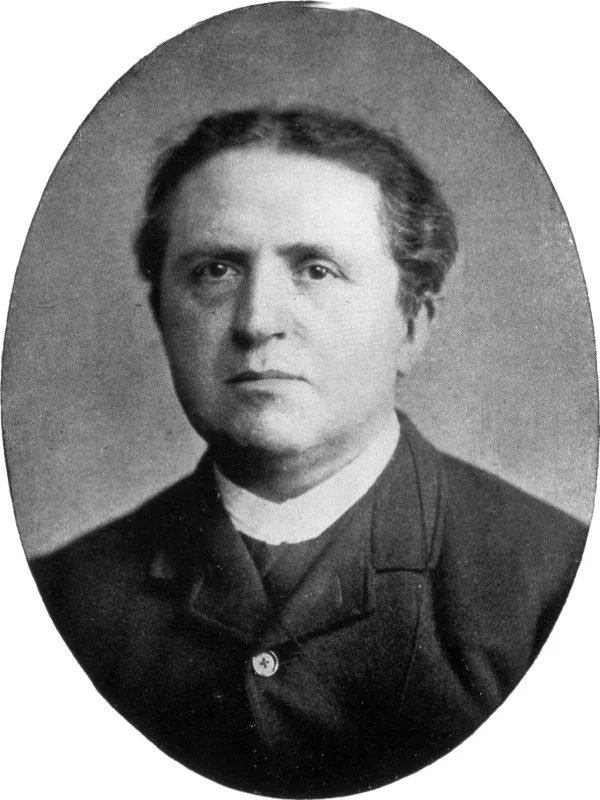
Two centuries later, a Dutch journalist and theologian took the same claim somewhere new. On the twentieth of October, 1880, Abraham Kuyper stood up to open a university he had founded in Amsterdam and told the crowd where its authority, and every other authority, actually came from: "There is not a square inch in the whole domain of human existence over which Christ, who is Sovereign over all, does not cry, 'Mine.'" Kuyper's point was not that the church should run the state. Every sphere of life, the family, a business, the university he was founding that day, answers to Christ directly. Each sphere answers to Him alone, not to any of the others.
Where the line runs today
The same three words carried through two thousand years: a Roman proconsul's court, a mosaic at Sinai, a coronation hymn, Calvin's Geneva, a Covenanter banner, Kuyper's Amsterdam. The crowned barbell and star on the back of our own Christ Is King tee sits at the end of that line, not the start of it.

Our Christ Is King tee carries the crowned barbell and star on the back, with CHRIST IS KING beneath it. The same mark is on the vinyl decal and car magnet.