The city that printed a Bible for exiles
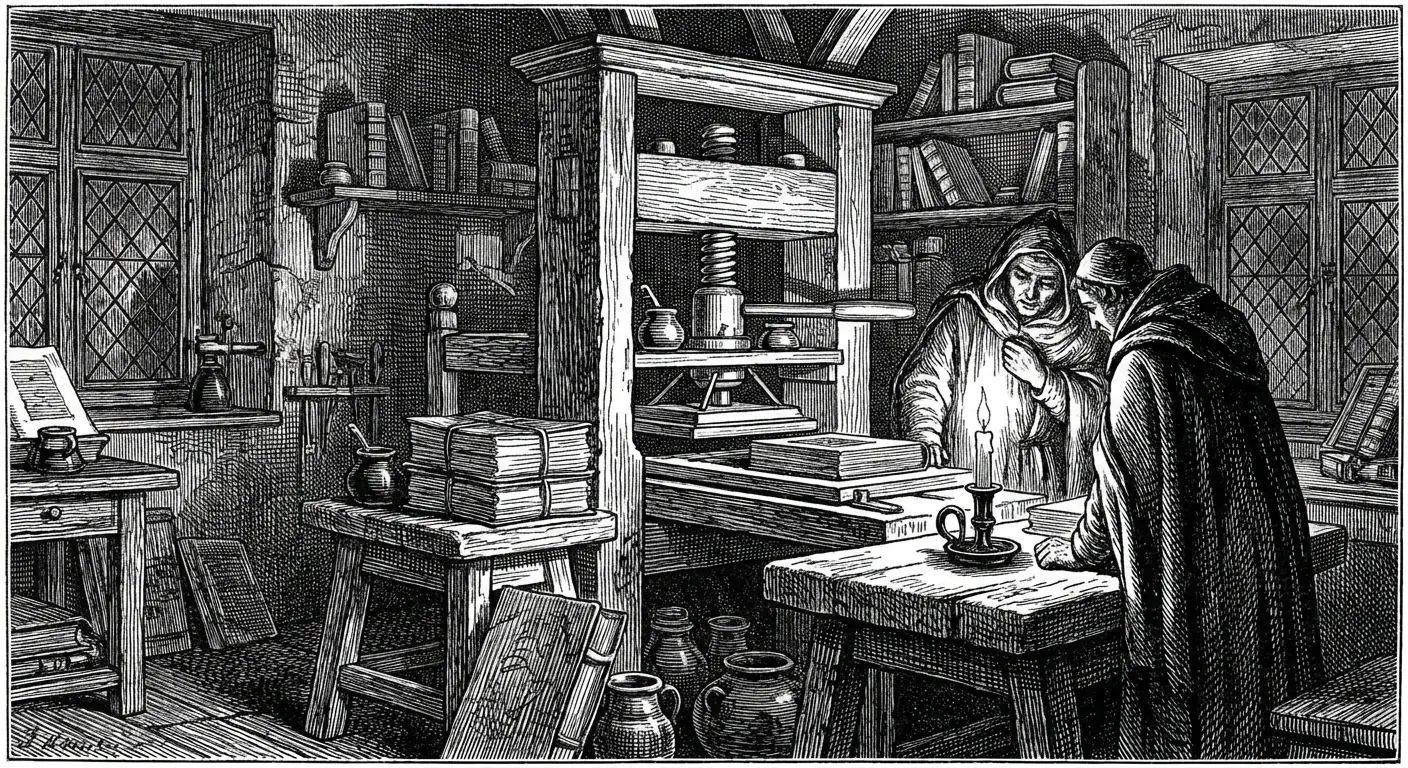
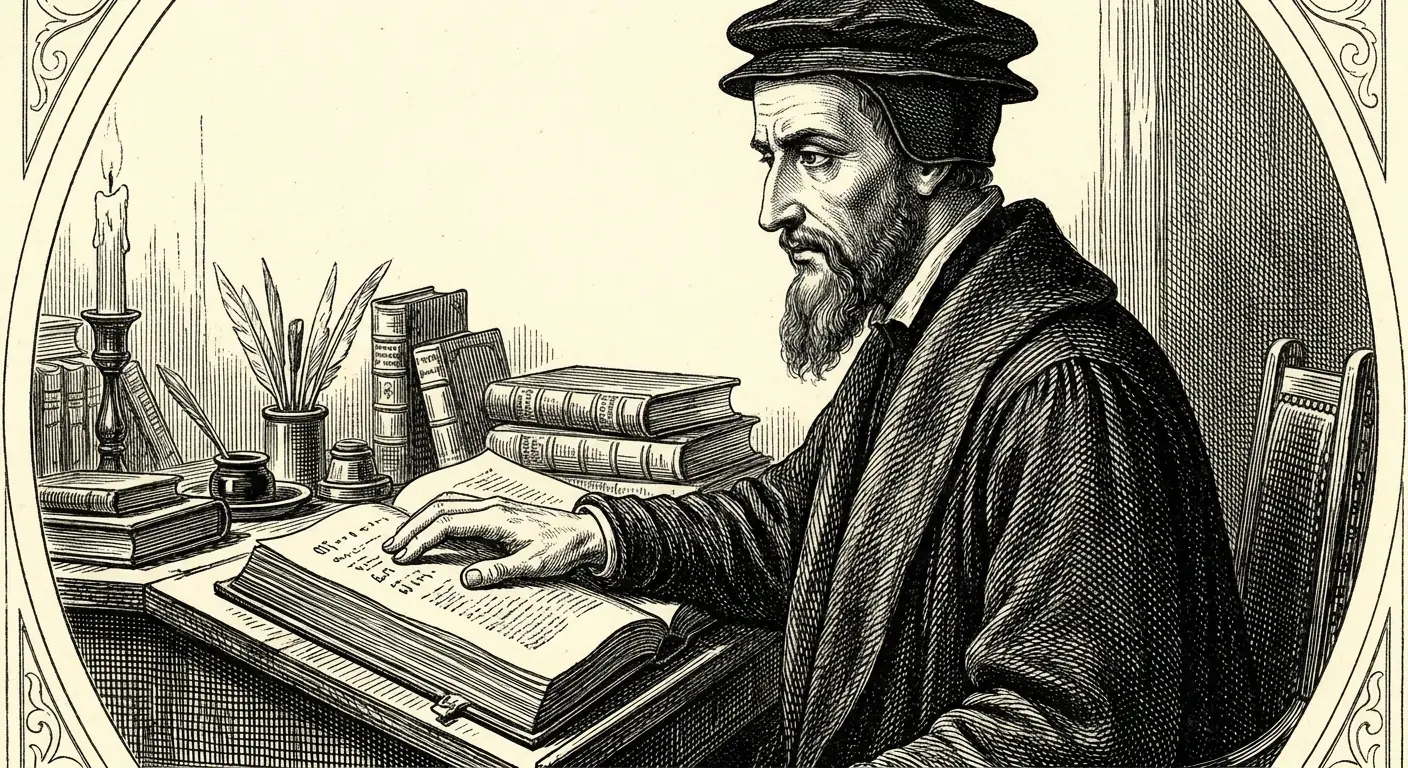
John Calvin never meant to run a city. He wanted, by his own account, a quiet scholar's life. He got Geneva instead, and Geneva became the place where a generation of Europe's exiled Protestants found shelter, argued theology, and, in the case of one group of Englishmen with nowhere else to go, printed a Bible that outlasted all of them.
A lawyer turned reformer
Calvin was born in Noyon, France, in 1509 and trained first in the humanist classics and then in law, at his father's direction, in Orleans and Bourges. Sometime in the early 1530s, by his own later description, God subdued and brought his mind to a teachable frame. France under Francis I had little patience for the change. The Affair of the Placards in October 1534, when reformers papered Paris and other cities overnight with broadsides attacking the Catholic Mass, brought a crackdown that made evangelical belief openly dangerous, and Calvin left the country not long after.
He intended to settle quietly in Strasbourg and write. Passing through Geneva in 1536, he was found out by the reformer Guillaume Farel, who by Calvin's own account threatened him with God's curse if he refused to stay and help the city's reform. Calvin stayed, on and off, for the rest of his life.
The Institutes
The same year he arrived in Geneva, Calvin published the first edition of the Institutes of the Christian Religion, a systematic account of Reformed doctrine that he kept expanding for the rest of his career, from a slim handbook in 1536 to the sprawling four-book edition of 1559. It became one of the Reformation's most widely translated and reprinted works of theology, read across Protestant Europe within his own lifetime.
A city of exiles
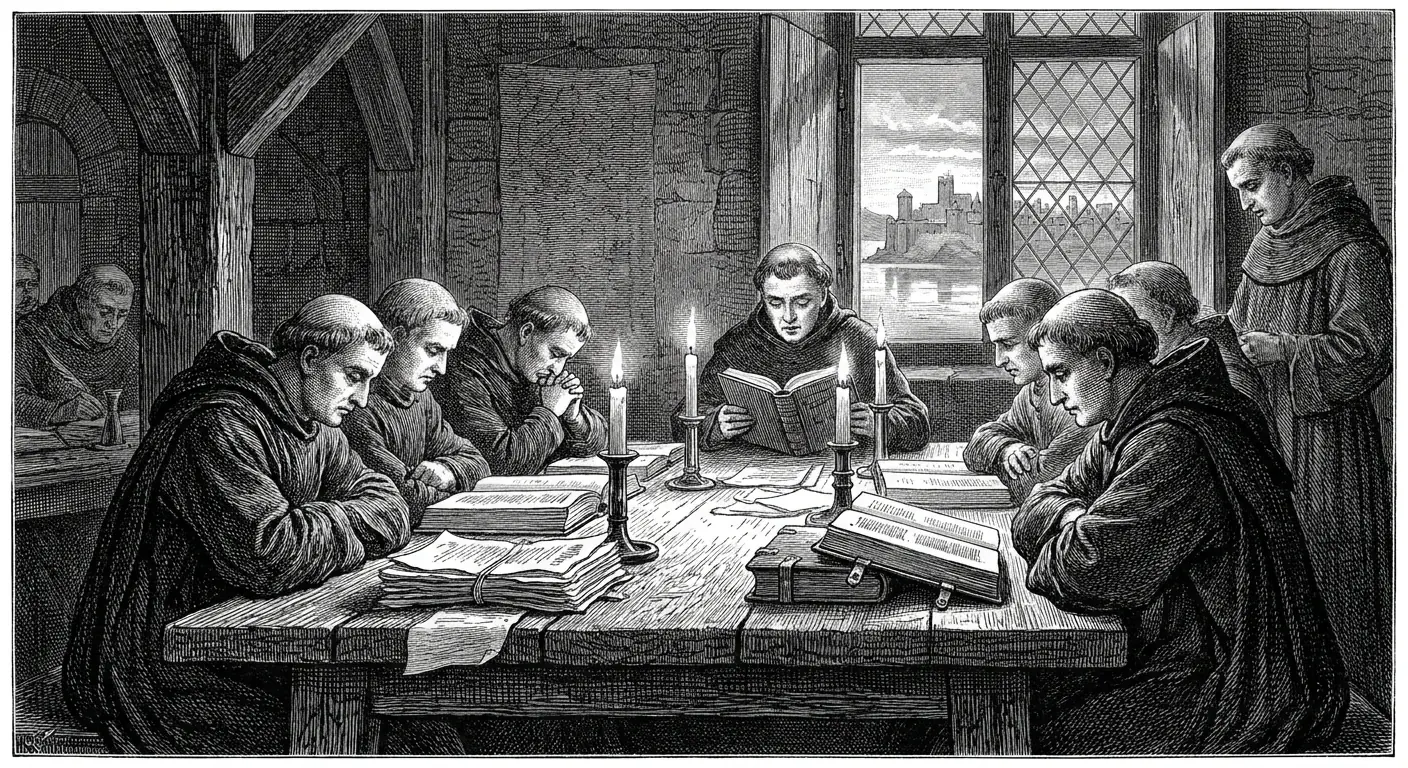
Geneva under Calvin's influence became something Europe had not had before: a Reformed city willing to take in Protestants fleeing persecution from France, Italy, the Low Countries, Scotland, and England, and to give them printing presses. When Mary I came to the English throne in 1553 and began restoring Catholic practice by force, several hundred English Protestants fled the country rather than recant or burn. A group of them, including the scholar William Whittingham, settled in Geneva.
Working from Hebrew and Greek texts alongside earlier English translations, that community produced the Geneva Bible in 1560: the first English Bible divided into numbered verses, printed in an affordable size ordinary readers could own, and filled with extensive marginal notes explaining and applying the text. It was not Calvin's own translation, and the notes were the exiles' work, not his. But it was produced in the city he had spent two decades building into a place where that kind of work was possible at all.
Play the valiant men
The Geneva Bible's own text of Nehemiah 4:14 reads: fight for your brethren, your sons, and your daughters, your wives, and your houses. Nehemiah says it to people rebuilding Jerusalem's wall under threat of attack. The marginal note on that verse explains that God is always on hand to deliver his own out of danger, and that since the builders fight for the maintenance of God's glory and the preservation of their own lives, he encourages them to play the valiant men. That last phrase is the one on the shirt's back. What the notes did, elsewhere and often, was exactly this kind of thing: take a war fought with trowels in one hand and swords in the other and tell an exiled reader plainly that the charge to defend what is worth defending was written for him too.
The Geneva Bible went on to become the Bible of the English household for two generations: Shakespeare quoted it, the Pilgrims carried it to Plymouth in 1620, and it remained more widely read than the King James Version for decades after that translation's release in 1611. None of it would have been printed where and when it was without a lawyer from Noyon who stopped in a lake city meaning to pass through.
The shirt

Our John Calvin tee carries his portrait on the back over the Geneva Bible's own words on Nehemiah 4:14. The city made the book possible. The exiles wrote the note.