Hugh Latimer: the candle that would not go out
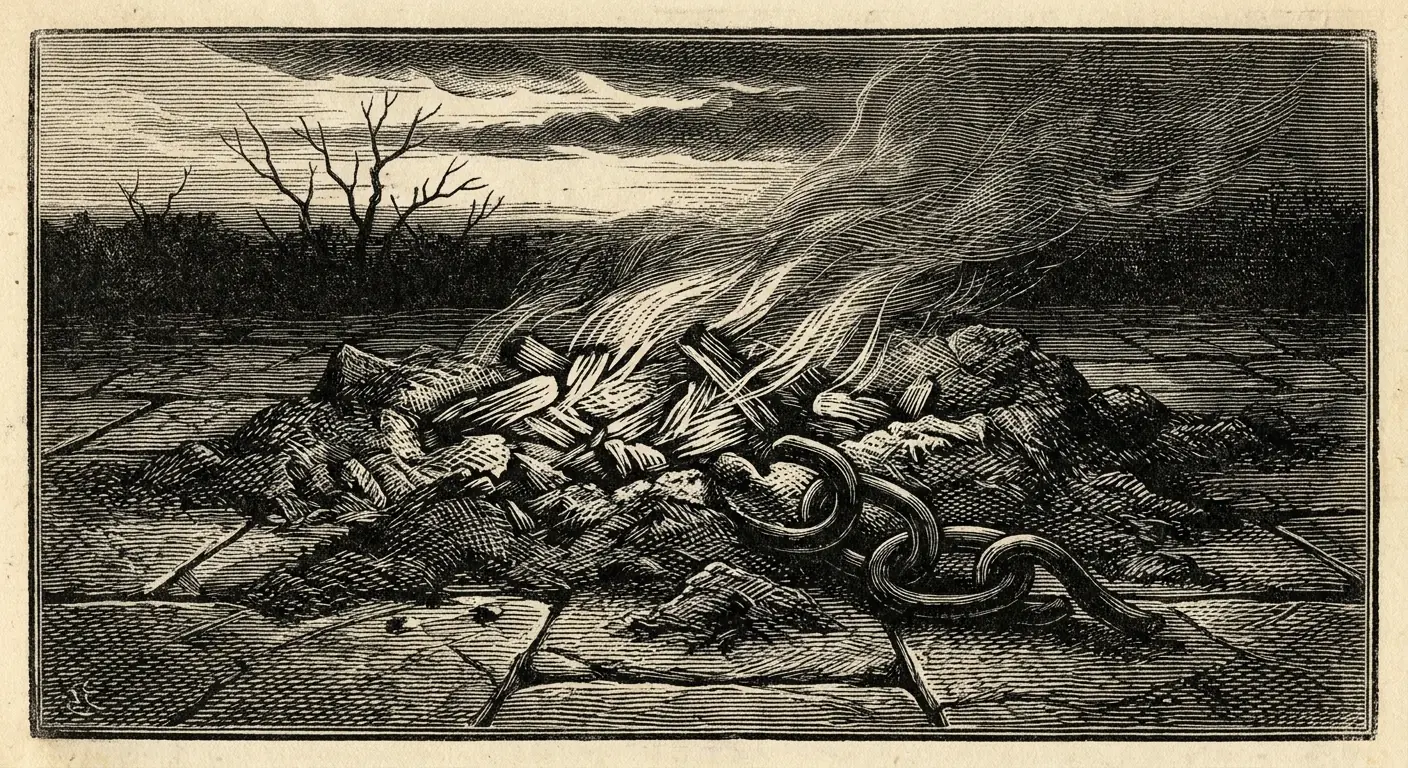
On the afternoon of October 16, 1555, two old men were led out through a gate in the Oxford city wall to a ditch that has since become a road called Broad Street. One of them, close to death already, said something to the other that has been quoted in English for almost five hundred years.
A preacher under three kings
Hugh Latimer was born in Leicestershire around 1487, took orders as a Catholic priest, and by his own later account preached against the Reformation before he was converted to it, sometime in the late 1520s. He became one of the most popular preachers in England, plain-spoken and willing to name names from the pulpit, and Henry VIII made him Bishop of Worcester in 1535.
He resigned that post in 1539 rather than sign Henry's Act of Six Articles, which reasserted Catholic doctrine the king still wanted enforced even after breaking with Rome, and he spent much of Henry's later reign either silenced or in the Tower of London. Edward VI's short, more thoroughly Protestant reign let him preach freely again, including sermons before the young king himself. Latimer was in his mid-sixties by the time Edward died in 1553.
Mary's reign, and the Oxford disputations
Mary I came to the throne in 1553 determined to restore England to Rome, and Latimer was arrested that September along with Thomas Cranmer, the Archbishop of Canterbury, and Nicholas Ridley, the Bishop of London. In April 1554 the three were moved to Oxford and made to dispute their beliefs, chiefly on the nature of the Lord's Supper, before university theologians who had already decided the outcome. The Oxford disputations were theater more than argument. All three were declared heretics, held for another year, and tried again in September 1555.
Latimer and Ridley were convicted first and sentenced together. Cranmer's case ran longer and ended differently: he signed recantations under pressure, then, at the very end, took them back and thrust the hand that had signed them into the fire first. His story belongs on its own page. Latimer and Ridley's ends came on the same October afternoon, at the same stake.
The stake on Broad Street
John Foxe, whose Acts and Monuments remains the fullest surviving account, describes Latimer arriving in a poor, worn frock with a plain shroud hidden underneath. In his ordinary clothes, Foxe writes, he had appeared a withered and crooked silly old man; stripped down to the shroud, he stood bolt upright, as comely a father as one might lightly behold. A single chain of iron went around both his and Ridley's waists, binding them to the one stake together.
It is at this point that Foxe records the sentence: Be of good comfort, Master Ridley, and play the man; we shall this day light such a candle, by God's grace, in England, as I trust shall never be put out.
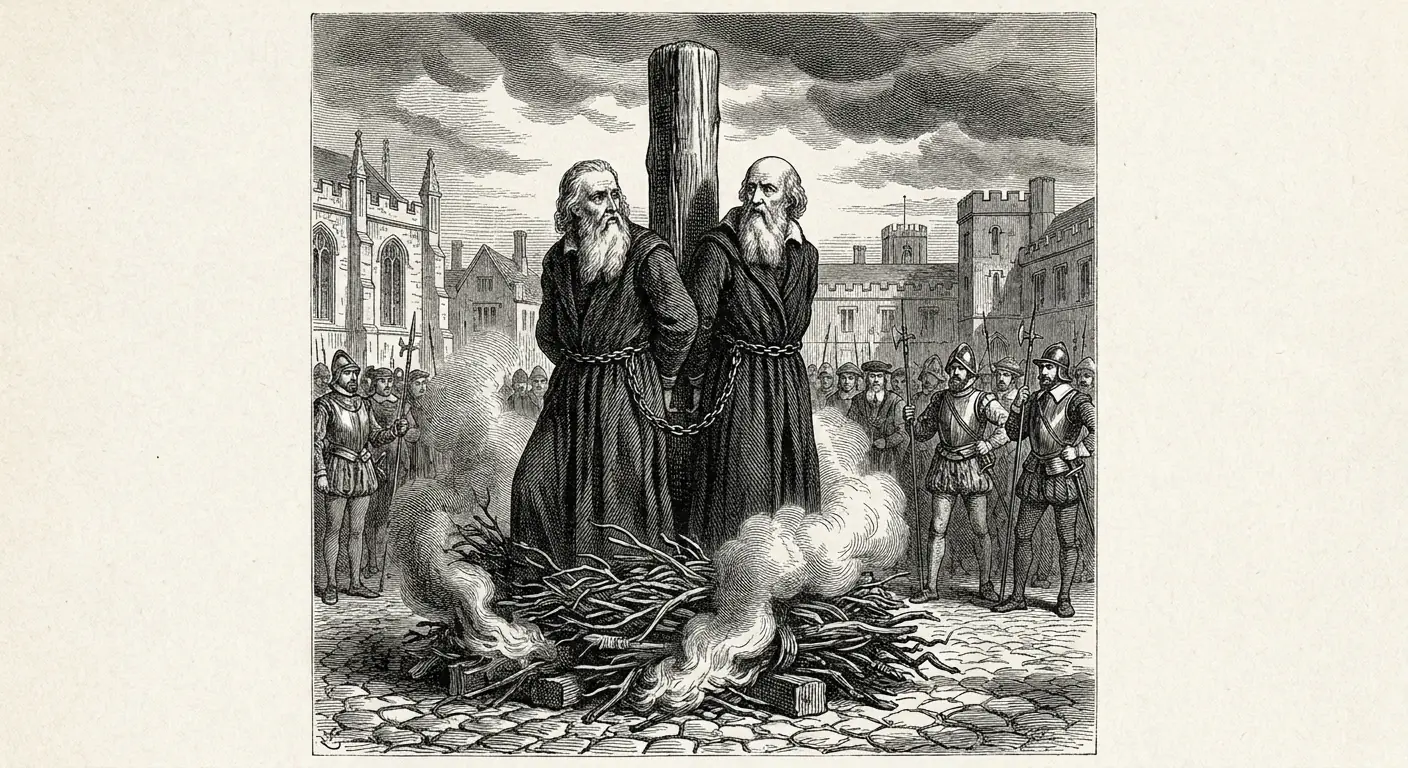
What followed was not quick for both of them. Latimer, by Foxe's account, died within minutes, drawing the flame to himself and bathing his hands in it as if it caused him little pain. Ridley's fire was banked too low around the lower wood, and it burned upward slowly against his legs before a bystander finally broke through the fagots and let the flame reach the gunpowder bags each man had been given to hang around his neck, which was the era's small mercy for a condemned heretic willing to accept it. Ridley's end, by every account, was the harder of the two.
Oxford, before and after
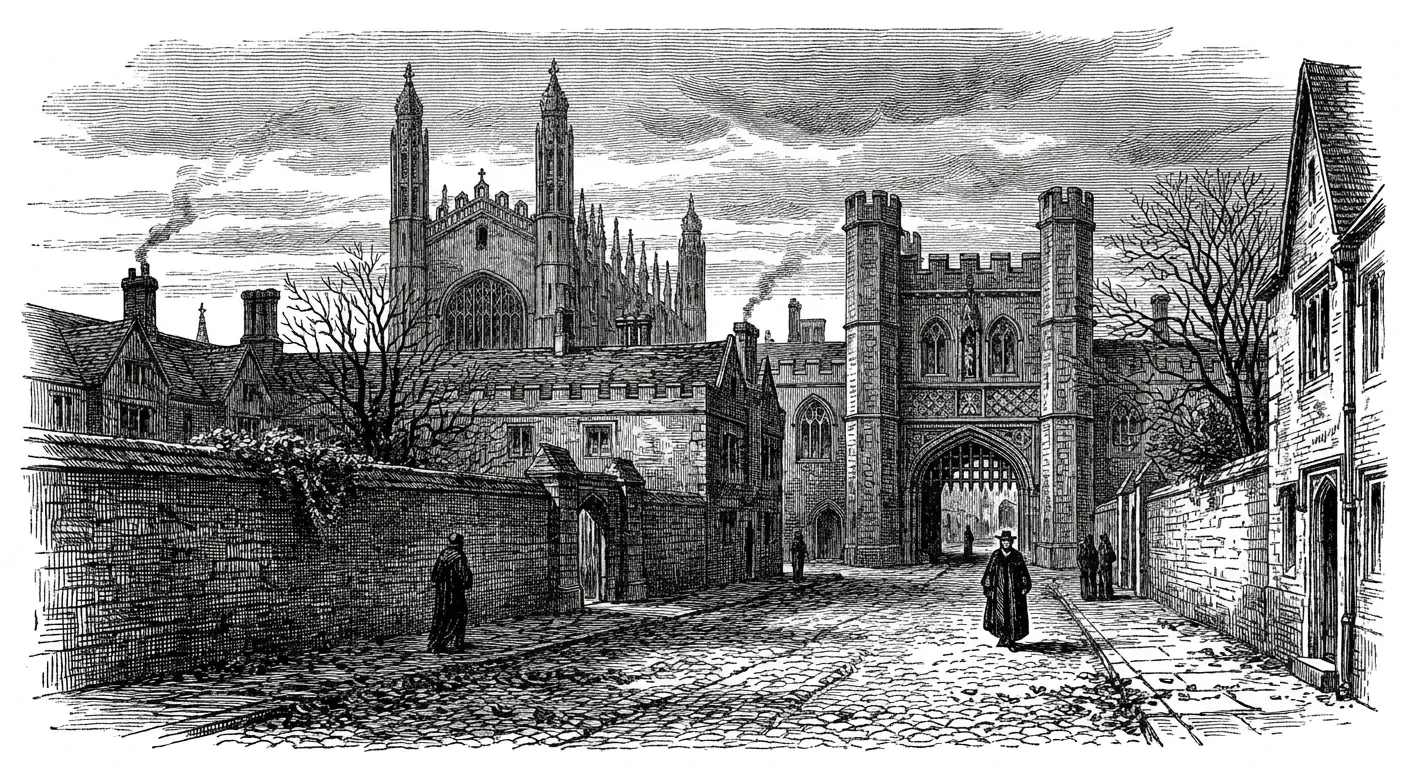
The town where this happened was not incidental. Oxford's colleges had been a center of the English Reformation's argument for a generation, and Mary's government chose it deliberately, to try the case where the university's own theologians could pronounce the verdict. A modern visitor can still find the spot marked on Broad Street, and a Victorian monument nearby names all three Oxford martyrs together.
Foxe published his account within a decade of the burning, while people who had stood in that crowd were still alive to contradict him if he had invented the words. Whatever else the sentence has become since, on posters and in sermons and finally on a shirt, it was first one dying man's attempt to steady another.
The shirt

Our Hugh Latimer tee carries his portrait on the back over the words he said to Ridley at the stake. Foxe wrote them down. We just put them on cotton.