Nicaea wasn't a safe space
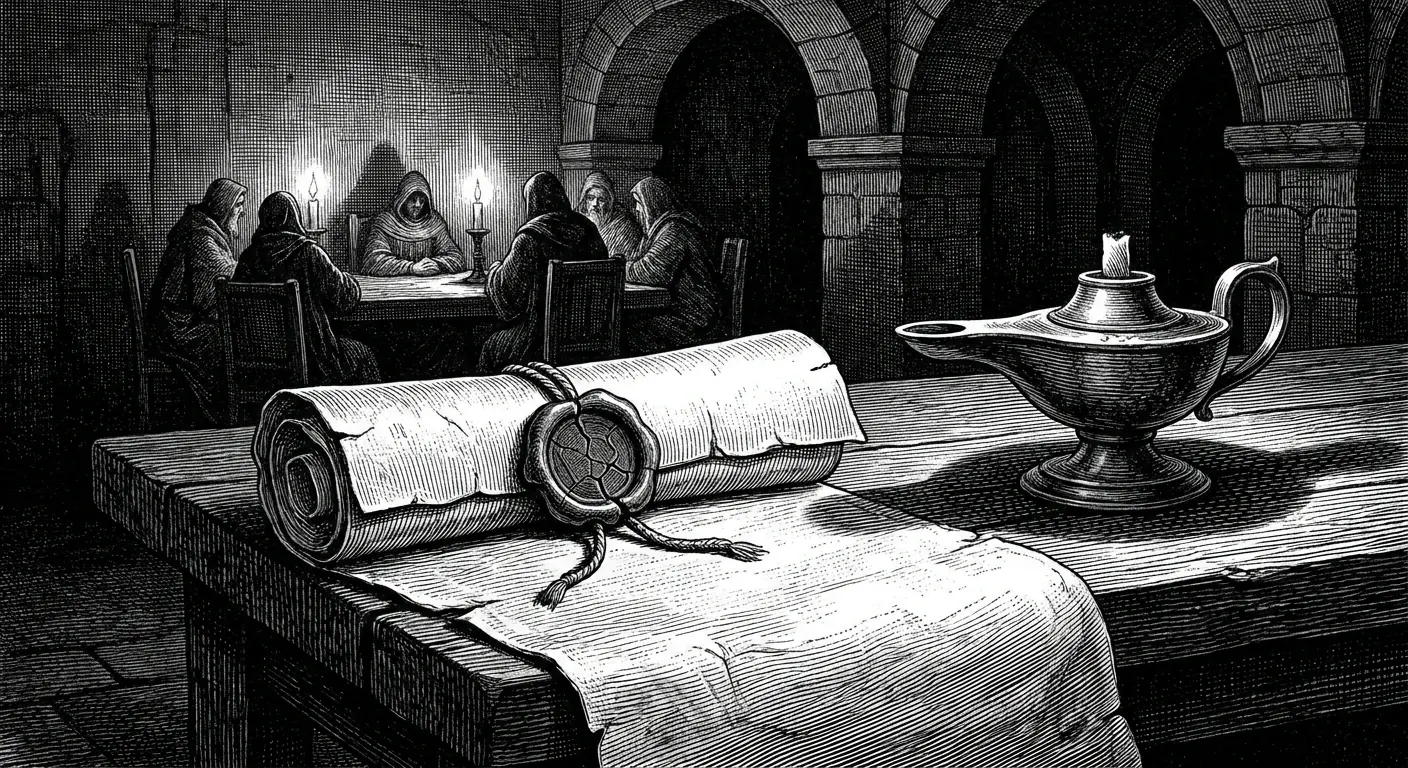
In the summer of AD 325, somewhere between two hundred and three hundred bishops traveled to a lakeside town in Asia Minor at the summons of an emperor who had held sole power for less than a year. They did not come to settle a small argument. They came to answer a question about who Jesus Christ is, and the answer they wrote down is still recited in churches every week, seventeen centuries later.
A priest from Alexandria
Arius was a presbyter in Alexandria, Egypt, popular with a following of his own, and he taught something specific: the Son of God had a beginning. In his own phrase, preserved by his opponents, there was a time when the Son was not. God the Father alone was eternal and without origin. The Son, however exalted, was the Father's first and greatest creation, brought into being before all worlds but not sharing the Father's own uncreated nature.
Alexander, the bishop of Alexandria, condemned the teaching and excommunicated Arius around 318. Arius did not go quietly. He had allies among other bishops, he wrote songs that put his theology into words ordinary people could sing, and by the early 320s the dispute had split congregations across Egypt, Syria, and Asia Minor. Constantine, who had unified the empire under his own rule in 324, inherited a church at war with itself over a question of language: what was the Son, in substance, to the Father?
The council
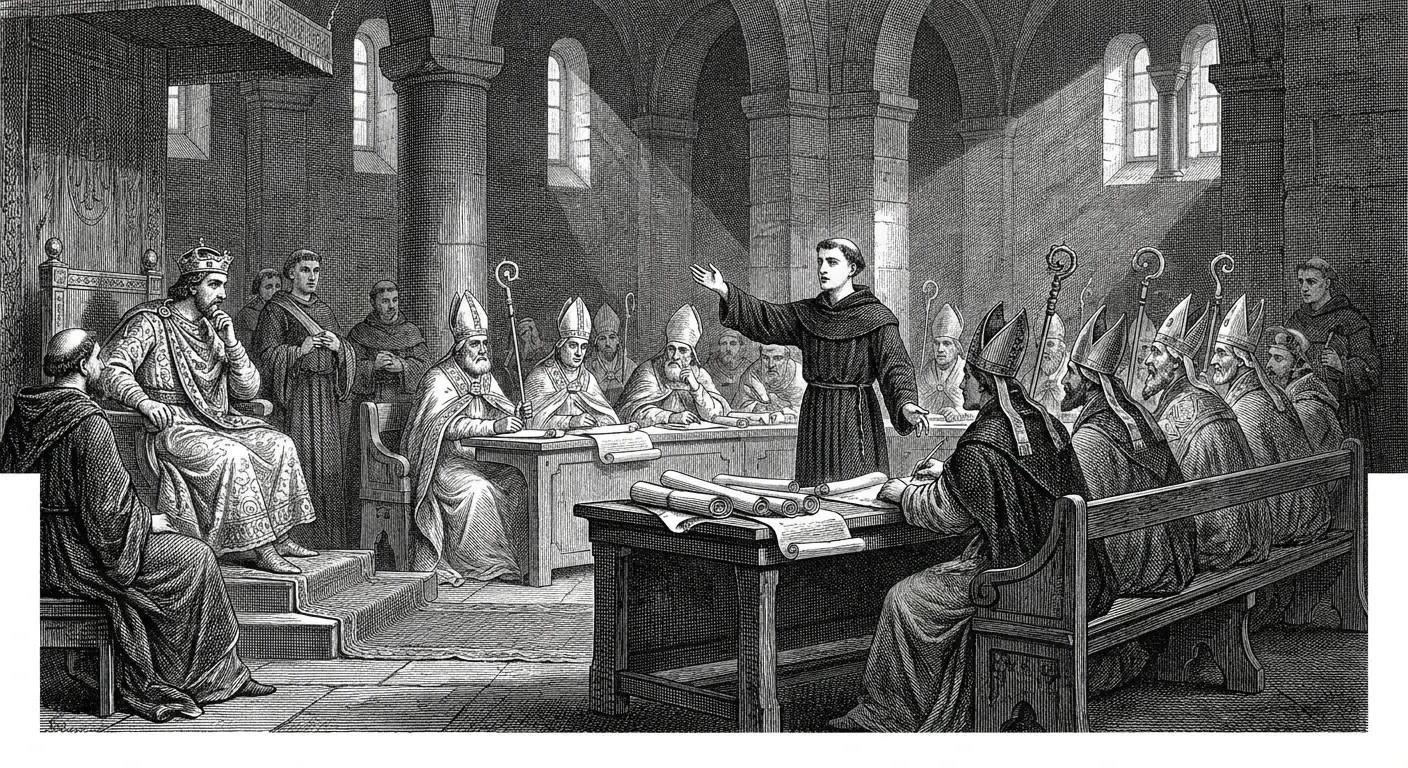
Constantine convened the bishops at Nicaea, in what is now northwestern Turkey, and by most accounts opened the sessions himself. Arius was present to argue his own case. Against him stood bishops from across the Greek-speaking world, among them Alexander of Alexandria and his young deacon Athanasius, who would spend most of the rest of his life defending what the council was about to write.
The council rejected Arius's teaching and produced a creed. Its critical word was homoousios, of one substance: the Son is not a creature and not a lesser being brought into existence by the Father's will, but true God from true God, of one substance with the Father. The bishops who signed it were not inventing a new belief. They understood themselves to be stating plainly what the church had confessed from the apostles onward, in terms precise enough that Arius's teaching could no longer hide inside vaguer language.
Arius was condemned. Was he struck?
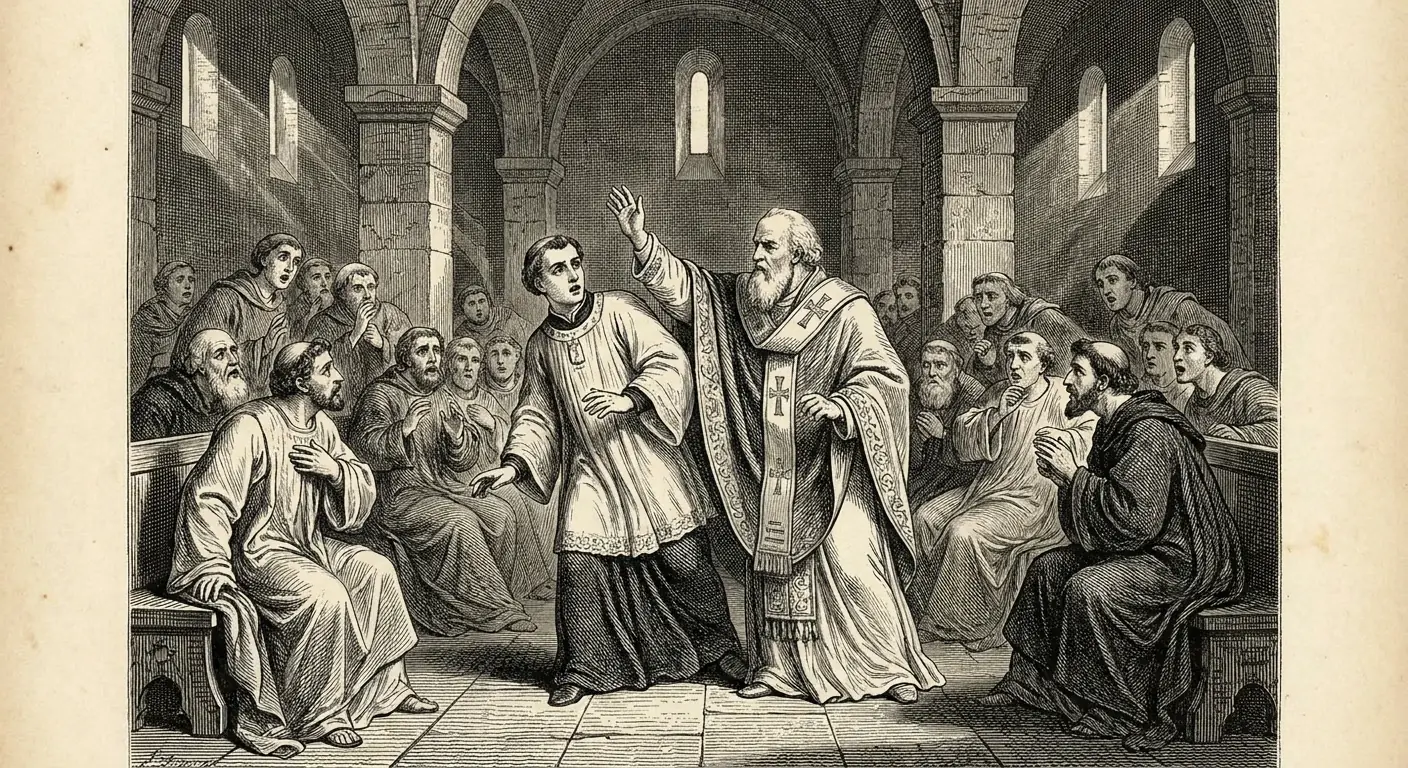
A later tradition holds that one bishop at the council lost patience with Arius entirely: Nicholas of Myra, the bishop later ages would remember as Saint Nicholas, struck him in front of the assembly. Painters have loved the scene for centuries, and it is easy to see why. It is also worth being honest about what the story is.
No account from the fourth or fifth century places Nicholas at Nicaea at all, let alone striking anyone. The earliest known telling comes from Petrus de Natalibus, a Venetian bishop writing around 1370, over a thousand years after the council itself. It may preserve something real. It may simply be what a later writer thought a saint should have done to a heretic. Either way, it is legend layered onto history, not part of the council's own record.
What the creed still does
The Nicene Creed did not end the argument in 325. Arian and semi-Arian factions held real power in the following decades, and Athanasius was exiled from his own see five times defending the word the council had chosen. The creed's final, settled form came later, at Constantinople in 381. But the substance was set at Nicaea: the church would confess the Son as true God, not a demoted, created stand-in for one.
That is not a fourth-century argument that stopped mattering. Every time a church recites the words true God from true God, of one substance with the Father, it is repeating the specific answer a council of bishops gave to a specific, well-argued heresy, in a hall where the wrong word could still get you condemned. The question was never a safe one to get wrong, and the bishops at Nicaea did not treat it as one.
The shirt

Our Nicaea Wasn't a Safe Space tee carries the later legend on the front and the creed's own words on the back, over THE CREED HITS DIFFERENT. The legend makes a good story. The creed is the part the church actually voted on.