Salvation is not for sale
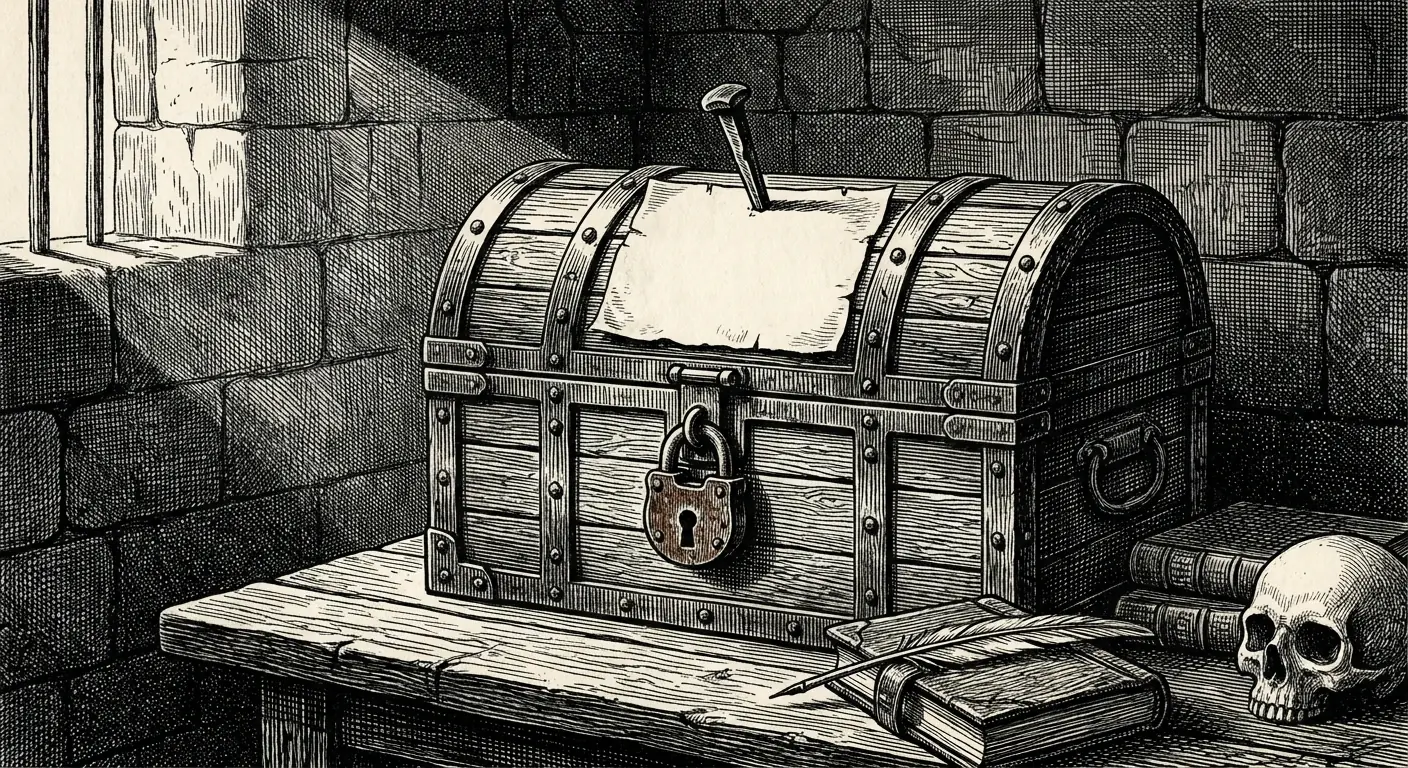
Before Martin Luther nailed anything to a church door, a Dominican friar named Johann Tetzel was working a preaching circuit through German towns with a chest, a stack of printed forms, and a pitch that made indulgences sound like the easiest transaction a person could make.
What an indulgence actually was
The Roman church taught, and still teaches, that sin, even forgiven sin, leaves a debt of temporal punishment still owed, worked off either in this life or in purgatory afterward. In the sixteenth century an indulgence was a document, granted on the pope's authority, that reduced or canceled that remaining debt, drawn against what theologians called the treasury of merit, the surplus of Christ's and the saints' merit the church held in trust. Indulgences for the living had existed for centuries, usually tied to a pilgrimage, a Crusade, or genuine penance. The Council of Trent reaffirmed indulgences in 1563, and the Catechism of the Catholic Church still teaches them today.
The promise had already been extended to the dead once before, in 1476, when Pope Sixtus IV ruled that an indulgence could shorten a deceased relative's time in purgatory. What changed under Pope Leo X, four decades later, was the scale and the sale. Leo needed money to finish rebuilding St. Peter's Basilica in Rome, and the indulgence campaign that funded it, run in Germany under Archbishop Albert of Mainz, took that same promise and sold it on a scale no one had tried before. It no longer required a pilgrimage. It required a coin.
The friar with the chest
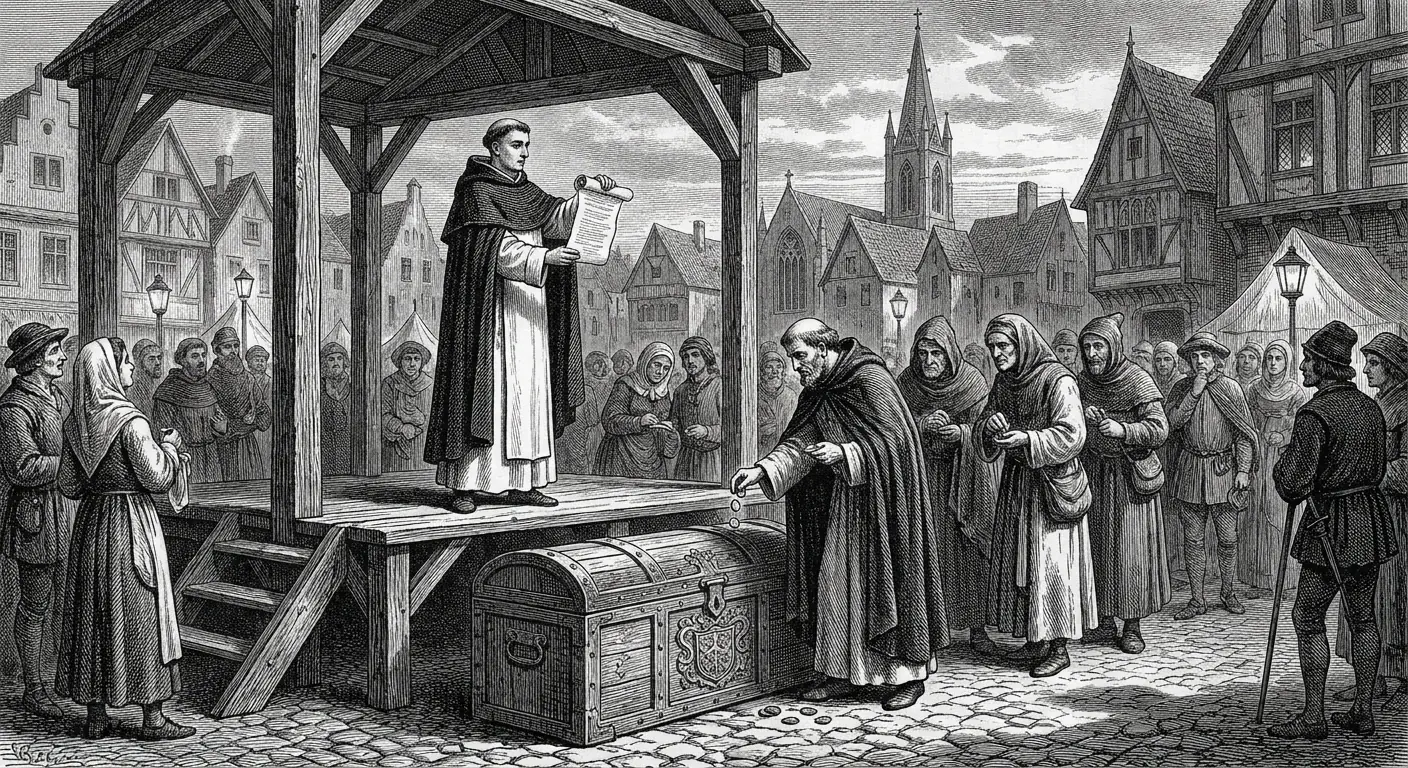
Tetzel was Albert's most effective salesman, and contemporaries on both sides of the argument that followed remembered him for the same rhyming pitch, rendered in English roughly as: as soon as a coin in the coffer rings, a soul from purgatory springs. Whether Tetzel used those exact words or a version of them is debated by historians, since the phrase survives mainly through the accounts of people arguing against him. What is not debated is that he preached the doctrine that bluntly, that his sermons drew crowds and coin in large numbers, and that his circuit reached close enough to Wittenberg, in Saxony, that Luther's own parishioners were crossing the border to buy from him.
Luther's ninety-five theses take aim at indulgences
Luther, an Augustinian friar and professor at Wittenberg, had spent years working through what he believed Scripture actually taught about repentance and grace, and Tetzel's campaign gave him a concrete target. In October 1517 he wrote ninety-five theses for academic debate, several of them aimed directly at the indulgence trade: that true repentance cannot be bought, that the pope has no power over souls already in purgatory, and that a Christian who gives to the poor does better than one who buys a pardon. How the theses reached the door of Wittenberg's Castle Church and how the printing press then carried Luther's argument across Germany faster than Rome could answer it is its own story, told on this site's Ink against fire page.
Without money, without price
The theology underneath Luther's argument is older than 1517. The prophet Isaiah had already put the offer in exactly those terms centuries earlier, inviting the thirsty to come and buy without money and without price. Luther's point was not that the church charged too much. It was that the thing on offer, forgiveness itself, was never a commodity a coffer could hold in the first place. A chest with a lock on it can hold silver. It cannot hold what only Christ paid for.
The shirt

Our Salvation Is Not for Sale tee carries the locked chest and the nailed indulgence on the back, over no indulgences, no price, Christ paid it. Tetzel's chest is long gone. Selling salvation for profit is not, and Luther's argument still condemns whoever follows Tetzel's example today.